Meta Description: Learn about cauda equina syndrome, its early warning signs, causes, diagnosis, and emergency treatment. Understand why rapid medical care is essential.
Cauda equina syndrome is a rare but life-threatening neurological emergency caused by compression of spinal nerve roots. Early recognition is critical to prevent permanent paralysis, bladder dysfunction, and long-term disability.
Although uncommon, cauda equina syndrome (CES) is one of the most urgent conditions in neurology and spine medicine. It occurs when the bundle of nerves at the lower end of the spinal cord becomes compressed, leading to rapidly progressing symptoms that require immediate surgical intervention.
In this guide, you’ll learn how to recognize early warning signs, understand the causes, and know exactly why fast treatment can make the difference between recovery and permanent damage.
What Is Cauda Equina Syndrome?
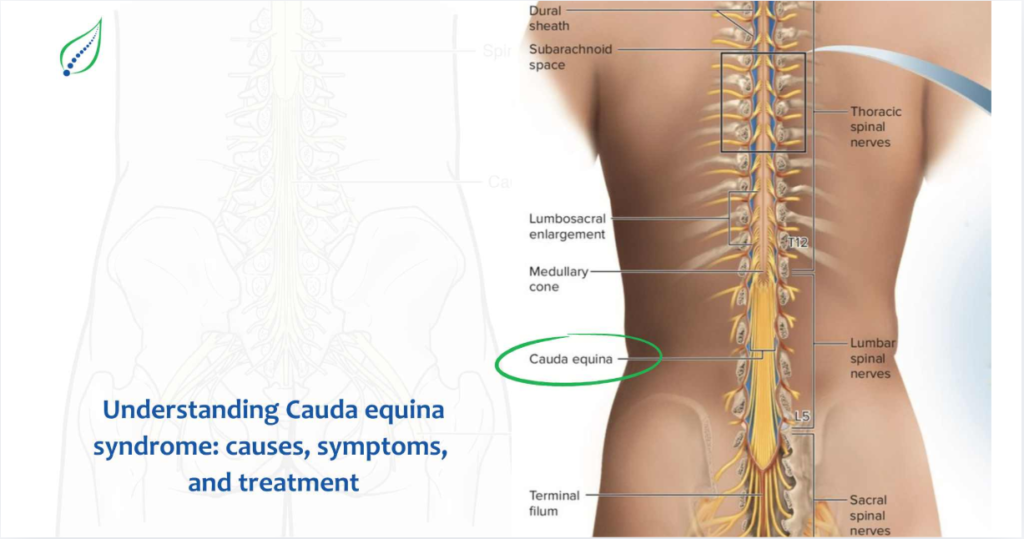
Cauda equina syndrome affects the cauda equina, a bundle of spinal nerve roots located at the lower end of the spinal cord (lumbar region).
Why it is called “cauda equina”
The term means “horse’s tail” in Latin because the nerves resemble a flowing tail at the base of the spine.
What happens in CES
- Compression of spinal nerve roots
- Disruption of motor and sensory signals
- Loss of bladder, bowel, and leg function in severe cases
Featured Snippet: What is cauda equina syndrome?
Cauda equina syndrome is a medical emergency caused by compression of nerve roots at the lower spinal cord, leading to severe back pain, leg weakness, and bladder or bowel dysfunction.
Early Warning Signs of Cauda Equina Syndrome
Recognizing early symptoms is essential for urgent treatment.
1. Severe lower back pain
- Sudden or worsening pain
- Often radiates to legs
2. Sciatica (leg pain)
- Sharp, shooting pain down one or both legs
- May worsen over time
3. Saddle anesthesia
Loss of sensation in areas that would touch a saddle:
- Inner thighs
- Buttocks
- Genital area
4. Bladder dysfunction
- Difficulty urinating
- Urinary retention
- Incontinence in advanced cases
5. Bowel dysfunction
- Loss of bowel control
- Constipation or leakage
6. Motor weakness
- Weakness in legs
- Difficulty walking or standing
Featured Snippet: What are the first signs of cauda equina syndrome?
The first signs of cauda equina syndrome include severe lower back pain, sciatica, numbness in the saddle area, and early bladder or bowel dysfunction.
Causes of Cauda Equina Syndrome
CES is usually caused by conditions that compress spinal nerve roots.
1. Herniated lumbar disc
- Most common cause
- Disc material presses on nerve roots
2. Spinal tumors
- Benign or malignant growths
- Gradual compression of nerves
3. Trauma
- Fractures or spinal injuries
- Sudden nerve compression
4. Spinal infections
- Abscess formation
- Inflammatory swelling
5. Spinal stenosis
- Narrowing of spinal canal
- Progressive nerve pressure
How Cauda Equina Syndrome Develops
Step 1: Initial compression
A structural problem narrows the spinal canal.
Step 2: Nerve irritation
Nerves become inflamed and painful.
Step 3: Loss of nerve function
Motor and sensory signals begin to fail.
Step 4: Permanent damage risk
Without treatment, irreversible nerve damage may occur.
Why Cauda Equina Syndrome Is a Medical Emergency
CES requires urgent intervention because nerve damage can become permanent.
Consequences of delayed treatment
- Permanent paralysis
- Chronic pain
- Loss of bladder/bowel control
- Sexual dysfunction
Featured Snippet: Why is cauda equina syndrome an emergency?
Cauda equina syndrome is an emergency because prolonged nerve compression can cause irreversible damage, leading to permanent paralysis and loss of bladder or bowel function.
Diagnosis of Cauda Equina Syndrome
1. Clinical examination
Doctors assess:
- Reflexes
- Muscle strength
- Sensory loss
2. MRI scan
- Gold standard diagnostic tool
- Shows nerve compression
3. CT scan (if MRI unavailable)
- Helps identify structural causes
4. Neurological tests
- Evaluate nerve function and severity
Treatment of Cauda Equina Syndrome
1. Emergency surgery
- Decompression surgery is required
- Ideally within 24–48 hours
2. Pain management
- Medications to control severe pain
3. Rehabilitation
- Physiotherapy
- Bladder and bowel training
4. Long-term care
- Monitoring recovery
- Mobility support if needed
Recovery and Prognosis
Recovery depends on:
- Speed of diagnosis
- Severity of nerve compression
- Timing of surgery
Possible outcomes
- Full recovery (if treated early)
- Partial recovery
- Permanent neurological deficits (if delayed)
Featured Snippet: Can cauda equina syndrome be cured?
Cauda equina syndrome can be partially or fully treated if surgery is performed quickly, but delayed treatment may result in permanent nerve damage.
When to Seek Emergency Help
Seek immediate medical attention if you experience:
- Sudden severe lower back pain
- Numbness in the saddle area
- Loss of bladder or bowel control
- Rapidly worsening leg weakness
Internal Linking Opportunities
This topic connects well with:
- Sciatica and nerve compression disorders
- Spinal disc herniation
- Neurological emergency conditions
- Lower back pain causes and treatment
- Spinal cord anatomy and function
Conclusion
Cauda equina syndrome is a rare but critical neurological emergency that requires immediate recognition and treatment. Early symptoms such as severe back pain, saddle numbness, and bladder dysfunction should never be ignored.
Because nerve damage can become permanent within a short time, rapid diagnosis and emergency surgery are essential for the best possible outcome. Awareness of these warning signs can significantly improve recovery chances and prevent long-term disability.
If symptoms appear suddenly, treating it as an emergency and seeking immediate medical care is the most important step you can take.