Meta Description: Learn about the different colors and consistencies of vaginal discharge, what is considered normal, and when changes may indicate an infection or other health concern.
Vaginal discharge is a normal and important part of reproductive health. It helps keep the vagina clean, maintains moisture, and supports the natural balance of microorganisms. The color, texture, and amount of discharge can vary throughout the menstrual cycle and at different stages of life.
While many changes are completely normal, some may signal infection or another underlying condition that requires medical attention.
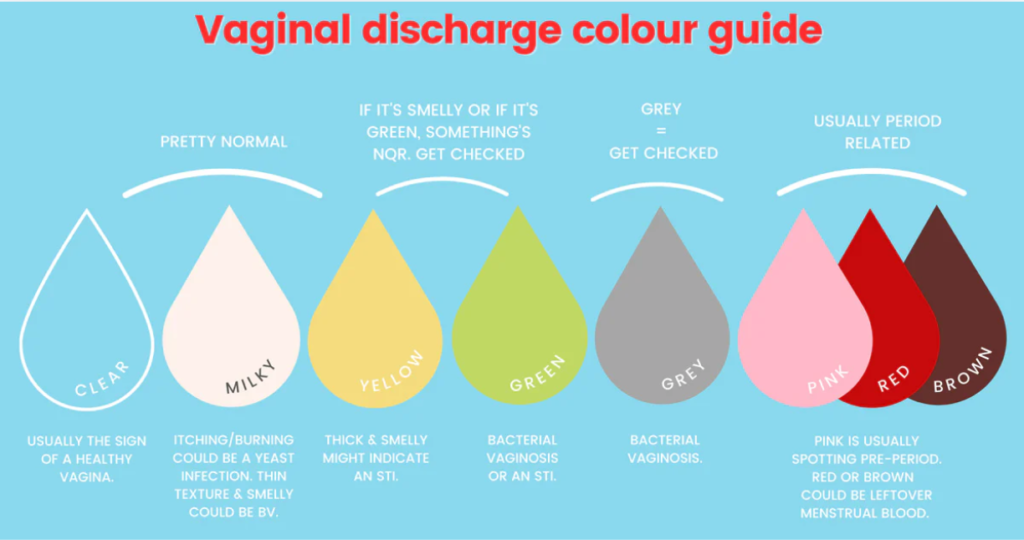
Featured Snippet: What does the color of vaginal discharge mean?
Vaginal discharge can range from clear and white to yellow, green, gray, or brown. While clear or white discharge is often normal, unusual colors, odors, or associated symptoms may indicate infection or other health concerns.
What Is Normal Vaginal Discharge?
Normal discharge varies from person to person but is typically:
- Clear or milky white
- Mild or odorless
- Non-irritating
- Variable throughout the menstrual cycle
The amount may increase during ovulation, pregnancy, or hormonal changes.
Clear Discharge
What it looks like
- Transparent
- Thin or stretchy
- Similar to egg whites around ovulation
What it may mean
Usually a sign of normal reproductive function and hormonal activity.
White Discharge
What it looks like
- Milky white
- Smooth or slightly thick
What it may mean
Often normal, especially at the beginning or end of the menstrual cycle.
When to be concerned
If accompanied by:
- Itching
- Burning
- Irritation
- Cottage cheese-like texture
it may suggest Vaginal candidiasis.
Yellow Discharge
What it looks like
- Pale yellow to darker yellow
What it may mean
Light yellow discharge can sometimes be normal.
However, darker yellow discharge accompanied by symptoms may indicate infection.
Associated symptoms
- Unpleasant odor
- Pelvic discomfort
- Itching
Green Discharge
What it looks like
- Yellow-green or green
- Thick or frothy
What it may mean
Green discharge is generally considered abnormal and may be associated with infection.
Related condition
Trichomoniasis
Gray Discharge
What it looks like
- Thin grayish discharge
What it may mean
May be associated with bacterial imbalance.
Related condition
Bacterial vaginosis
Common associated sign
- Strong fishy odor
Brown Discharge
What it looks like
- Light brown to dark brown
What it may mean
Often represents old blood leaving the body.
Common situations
- Beginning or end of menstruation
- After menstrual bleeding
- Hormonal changes
When to seek evaluation
Persistent or unexplained bleeding should be assessed by a healthcare professional.
Pink Discharge
What it looks like
- Light pink coloration
What it may mean
Can occur due to:
- Light spotting
- Hormonal fluctuations
- Ovulation
Understanding Discharge Consistency
Thin and watery
Usually normal and may vary with hormonal changes.
Stretchy and slippery
Common around ovulation and associated with fertility.
Thick and creamy
Often normal during certain phases of the menstrual cycle.
Clumpy or cottage cheese-like
May suggest a yeast infection, particularly when accompanied by itching.
When Vaginal Discharge May Signal a Problem
Seek medical evaluation if discharge is accompanied by:
- Strong or unpleasant odor
- Vaginal itching
- Burning sensation
- Pelvic pain
- Pain during urination
- Fever
- Abnormal bleeding
Related condition
Pelvic inflammatory disease
Factors That Can Influence Vaginal Discharge
Hormonal changes
- Menstrual cycle
- Pregnancy
- Menopause
Medications
- Antibiotics
- Hormonal contraceptives
Lifestyle factors
- Hygiene practices
- Sexual activity
- Stress
Common Myths About Vaginal Discharge
Myth: Any discharge means infection
Healthy vaginal discharge is normal and necessary.
Myth: Vaginal discharge should never change
Changes throughout the menstrual cycle are expected.
Myth: Strong cleansing products improve vaginal health
Harsh products can disrupt the natural balance of vaginal flora and increase irritation.
Supporting Vaginal Health
Healthy habits
- Wear breathable underwear
- Maintain good hygiene
- Avoid unnecessary douching
- Practice safe sex
- Seek prompt care for unusual symptoms
Internal Linking Opportunities
This topic connects well with:
- Women’s reproductive health
- Yeast infections
- Sexually transmitted infections
- Hormonal changes and menstrual health
- Bacterial vaginosis
Conclusion
Vaginal discharge is a normal and important part of reproductive health, and its appearance can vary depending on hormonal changes and individual factors. Clear, white, or mildly changing discharge is often normal, while unusual colors, odors, or accompanying symptoms may indicate an infection or other condition.
Understanding these differences can help individuals recognize when changes are expected and when professional medical evaluation may be needed.
Important Disclaimer: This article is for educational purposes only and should not replace professional medical advice. Anyone experiencing persistent symptoms, unusual discharge, pain, or concerns about reproductive health should consult a qualified healthcare professional.